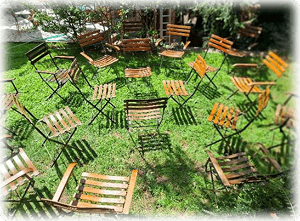
Social Dreaming
The School is a part of SDIN
(Social Dreaming International Network)
Social dreaming is a method of sharing dreams and associations among several people, in a safe and protected environment. Unlike the interpretation of individual dreams, attention here is directed to the shared process of connecting the images that dreams bring and the associations to them, through which we can see the world within us and around us from a fresh perspective.
The starting point is the idea that dreams can have significance not only for the individual, but also for the wider community. Social dreaming can help recognize deeper, often invisible movements in the world around us, as well as encourage creativity and new thoughts.
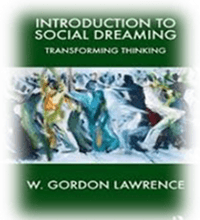
The Koinonia-Art School offers
A – Regular training for social dreaming hosts, and
B – Short training adapted to the needs of the role of host of in the Reflecting Citizens.
Social Dreaming and Social Dreaming Training
Social Dreaming
Social dreaming is a special method of sharing dreams and associations among several people who wish to take part in such an experience, in a safe and protected environment. In social dreaming, individual dreams are not interpreted; instead, a process is set in motion of creating a kind of kaleidoscopic collage from the shared dream images and associations, through which we can then view the world within us and around us in a new way.
We might ask ourselves why this would be significant. One possible answer is that dreams potentially have significance not only for an individual, but also for the wider community and society. Some experiences show that, through such contact with dreams, it is possible to sense certain movements in society, movements beneath the surface, i.e. in our social unconscious. In addition, many participants say that the experience of social dreaming set off heightened associative thinking and creativity, both in themselves individually and in the other participants.
A few words about the history of the social dreaming method
The Social Dreaming method, which is taught and explored at this School, was developed by Dr Gordon Lawrence and his colleagues at the Tavistock Institute in 1982. Among the sources of inspiration for the development of the method was Charlotte Beradt’s book ‘The Third Reich of Dreams: The Nightmares of a Nation’. In the years leading up to the Second World War, Beradt collected her own dreams, as well as those of her neighbours and friends. She noticed recurring themes and symbols that reflected social aspects of their lives at the time.
The method was brought to Belgrade by Dr Marina Mojović in 2013. Together with Angela Eaden, a colleague of Gordon Lawrence, she established the Belgrade Training for Social Dreaming Hosts. Over the past few years, several Social Dreaming Hosts have been trained. The School is currently developing a partnership with the leading international network of professionals working in the field of Social Dreaming, the Social Dreaming International Network (socialdreaminginternational.net), led by Franca Fubini.
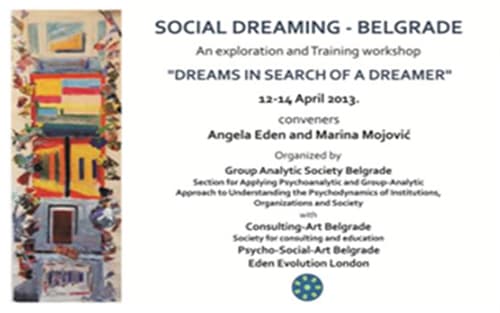
Independent and applied social dreaming
The Social Dreaming method can be organised as a stand-alone event or incorporated as an integral part of a workshop or conference. The most significant application of Social Dreaming in our context is within the Reflective Citizens Kinonia method. It is also used in a wide range of work with organisations, as well as in organisational consulting, professional gatherings and similar events that foster a creative approach to exploring the complexity of human relationships in different contexts.
Basic concepts of social dreaming practice
- Social dreaming matrix
- Social dreaming host
- Task and process
- Free associations, amplification and systems thinking
- Social dreaming dialogue
- ‘Snowflake’ working space
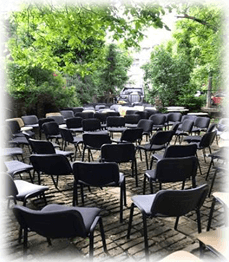
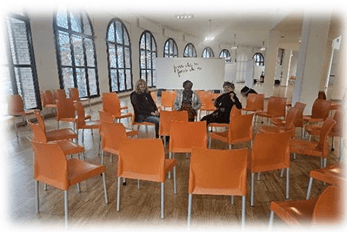
This is how social dreaming looks like in practice
- It takes place in a protected and, preferably, pleasant working space.
- The role of the host of the social dreaming matrix is held by those who, in addition to having many years of experience in social dreaming, have also completed appropriate training.
- Anywhere from a few to a few dozen people can take part in social dreaming, sitting in a special chair formation called the ‘snowflake’.
- Depending on the needs of the event within which social dreaming takes place, it is very common practice to organise a social dreaming dialogue after the social dreaming matrix session.
- The total duration of social dreaming is adapted to the occasion, and it can last from 30 to 90 minutes.